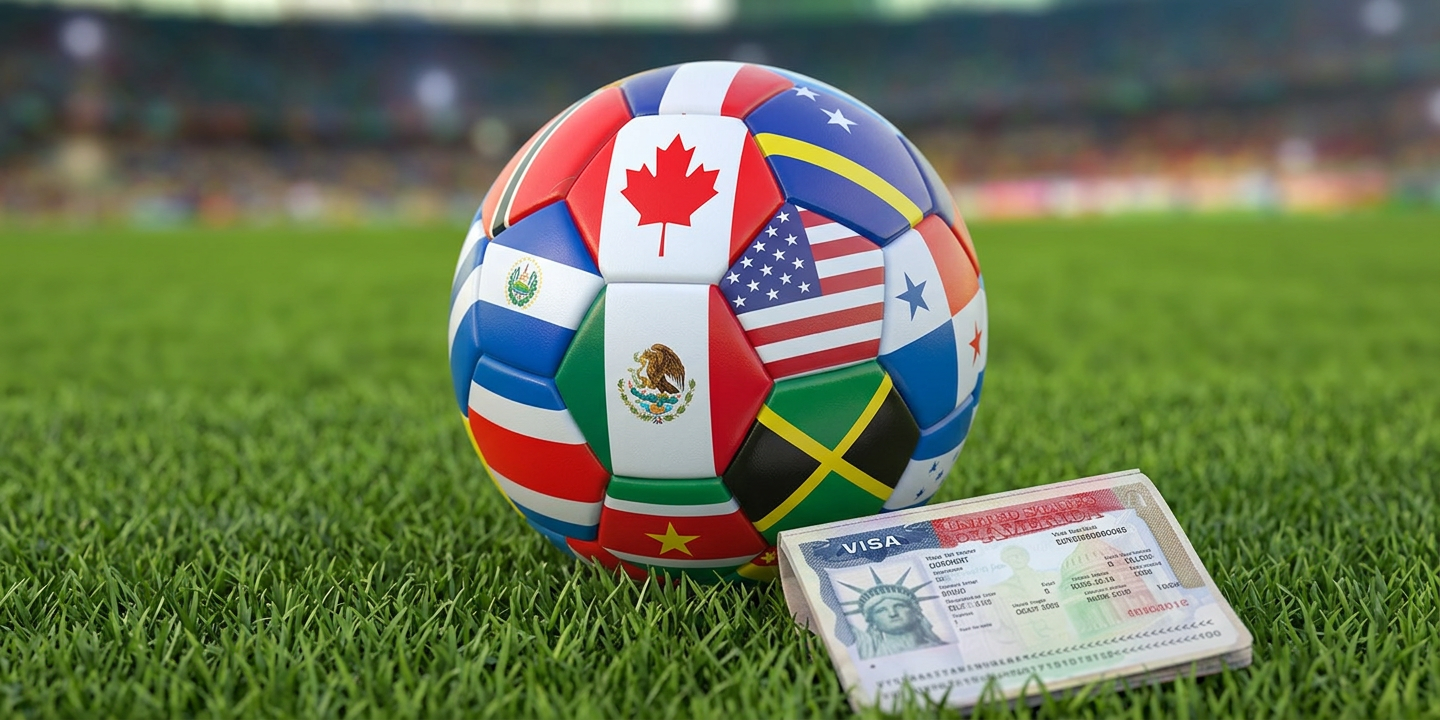
Don't Miss the 2026 World Cup in the US Due to Visa Issues!
The dream of witnessing the FIFA World Cup 2026 in the United States, Mexico, and Canada is within reach for many, but there's a crucial hurdle you cannot ignore: the entry visa to the United States. Thousands of fans will miss out on this historic experience, not for lack of passion or money, but for failing to manage their immigration process on time or correctly. If you're part of the Hispanic community in the U.S. or planning to visit, this guide is essential for you.
Below, we break down everything you need to know to secure your trip, avoid common mistakes, and increase your chances of visa approval.
Do I need a visa to go to the 2026 World Cup in the United States?
Yes, the vast majority of citizens from Latin American countries and other territories require a tourist visa to enter the United States. Visa waivers (via the ESTA program) primarily apply to Western European countries and other allies. It is crucial to verify if your nationality requires a visa. The appropriate visa for tourism purposes, including attending sporting events like the World Cup, is the B1/B2 visa.
This visa allows you to travel for pleasure, visit family or friends, and attend cultural or sporting events for a limited period. If you do not have a valid B1/B2 visa, you must start this process as soon as possible, as waiting times for consular appointments can be extensive, varying significantly between countries and embassies.
What type of visa do you need to attend the World Cup?
As mentioned, the ideal visa for attending the FIFA World Cup 2026 as a spectator is the B1/B2 non-immigrant visa. It is important to clarify that there is no "special World Cup visa." The requirements and process are the same as for any other tourist visa.
With a valid B1/B2 visa, you will be able to:
- Enter the United States for tourism purposes.
- Attend major sporting events like the World Cup.
- Participate in recreational activities.
- Stay in the country for the period authorized by the CBP officer upon your arrival, generally up to six months (though the specific duration may vary).
It is fundamental to understand that this visa does not allow you to work, study, or reside permanently in the United States. Any attempt to violate the visa conditions could result in its cancellation, deportation, and a ban on future entries.
Essential Requirements for a B1/B2 Tourist Visa Application
To apply for a B1/B2 visa, the process involves several stages and the submission of specific documentation. The main requirements include:
- Valid Passport: Your passport must be valid for at least six months beyond your intended period of stay in the United States.
- Form DS-160 (Online Nonimmigrant Visa Application): This form must be completed accurately and honestly. It is the foundation of your application, and any errors or inconsistencies can lead to issues.
- Payment of the Visa Application Fee (MRV Fee): The current cost for a B1/B2 visa is $185 USD. This fee is non-refundable, even if your application is denied. Check the exact amount on the official website of the U.S. embassy or consulate in your country, as it may vary.
- Interview at a U.S. Embassy or Consulate: All applicants between 14 and 79 years old generally must attend a personal interview with a consular officer.
In addition to these administrative elements, the most critical aspect of your B1/B2 visa application is demonstrating your intent not to immigrate and your strong ties to your home country. To do this, you will need to prove:
- Significant ties to your country of residence: This includes proof of stable employment, property ownership, family ties (spouse, children, etc.), current studies, or any other situation demonstrating compelling reasons to return to your country after your visit.
- Financial capability: You must demonstrate that you have sufficient financial means to cover your expenses during your stay in the United States. This can include bank statements, proof of income, sponsorship letters (if someone else covers your expenses), etc.
- Clear purpose of travel: You must explain why you want to go to the United States (in this case, to attend the 2026 World Cup) and have a clear travel itinerary, even if provisional.
- Intent to return to your country: This is the key point. The consular officer will look for evidence that you do not intend to stay in the United States permanently.
How long does the visa process for the 2026 World Cup take?
This is the point most people underestimate and is the primary reason many miss out on traveling. Waiting times for tourist visa interview appointments can be extremely long, especially in high-demand consulates. Currently, in some countries, these times can range from weeks to over a year. With the impending 2026 World Cup, demand is expected to increase exponentially, which will likely further extend waiting times.
Key Recommendation: If you intend to attend the 2026 World Cup and do not possess a valid B1/B2 visa, you must start your application process at least 1 year in advance. If possible, ideally you should start two years before the event, to allow for unforeseen circumstances or to reapply in case of an initial denial. Check current waiting times on the official U.S. Department of State website (travel.state.gov) or the embassy/consulate in your country.
What happens if my visa is denied?
A visa denial can be discouraging, but it's not always the end of the road. It's important to understand the reasons for the denial. Common causes include:
- Failure to demonstrate sufficient ties to your home country: This is the most frequent reason. The consular officer was not convinced you would return.
- Inconsistencies in the application or during the interview: Providing contradictory or unclear information.
- Lack of documentation or false information: Lying or presenting fraudulent documents is an automatic reason for denial and can lead to future entry bans.
- Negative immigration history: Having violated immigration laws in the past.
In many cases, if the denial was due to a lack of proof of ties or poor preparation, you can reapply. However, it is vital to have corrected the deficiencies of the previous application. Proper guidance can help you identify weaknesses in your first application and strengthen your case for a second application, significantly increasing your chances of approval.
Common Mistakes When Applying for a 2026 World Cup Visa
To avoid a negative outcome, pay attention to these frequent mistakes:
- Incorrectly filling out the DS-160 form: Any omission, typo, or false information can lead to denial. Take the necessary time to complete it with utmost care.
- Lying or being inconsistent: The embassy has access to vast amounts of information, and any false or inconsistent information between your DS-160 and your interview will be detected. Honesty is paramount.
- Not preparing for the interview: The interview is brief but crucial. You must be able to clearly explain the purpose of your trip, your plans, and your ties to your country. Failing to answer or showing excessive nervousness can raise suspicion.
- Applying too late: As mentioned, waiting times are long. Don't leave this process until the last minute.
- Not presenting sufficient proof of financial solvency or ties: Make sure to bring all supporting documents that demonstrate your roots and financial capacity.
How to Secure Your Visa for the 2026 World Cup
The key to a successful visa application is preparation and honesty. Follow these steps to increase your chances:
- Thorough research: Familiarize yourself with all the specific requirements of the embassy or consulate in your country.
- Complete the DS-160 accurately: Review the form several times before submitting it.
- Gather supporting documents: Have your passport, payment receipt, DS-160 confirmation, photos, as well as all documents proving your economic, family, and professional ties to your country, ready.
- Prepare for the interview: Practice your answers to potential questions. Be concise, clear, and honest. Focus on demonstrating your strong ties to your country.
- Plan ahead: Start the process as early as possible.
- Consider professional advice: If you feel overwhelmed or have a complex case (e.g., previous denials or special situations), seeking guidance from a licensed immigration attorney can be very helpful in reviewing your profile, preparing your documentation, and guiding you for the interview. Remember, always seek licensed immigration attorneys if you need legal advice.
Frequently Asked Questions (FAQ) about the 2026 World Cup Visa
Can I buy World Cup tickets before getting my visa?
Generally, yes, you can buy tickets. However, it is highly recommended not to make non-refundable financial commitments (such as plane tickets or definitive match tickets) until you have your visa approved in hand. If your visa is denied after purchasing tickets, you could lose your investment.
What if my country has very long waiting times for visa interviews?
If waiting times are too long, your only option is to apply as far in advance as possible. Some embassies may have emergency appointments for very specific cases, but attending the World Cup rarely qualifies as an emergency. Early planning is your best strategy.
Is it necessary to have a detailed travel itinerary for the interview?
It's not strictly necessary to have every detail planned (like paid hotel reservations), but you should have a clear idea of where you will go, for how long, and how you plan to cover your expenses. A solid provisional itinerary demonstrates that you have planned your trip.
What if I have a criminal record?
Criminal records can significantly complicate obtaining a visa. The possibility of approval will depend on the nature, severity, and date of the offense, as well as U.S. law. In such cases, it is essential to seek the advice of a qualified immigration attorney.
Does a letter of invitation from a relative in the U.S. help obtain a visa?
A letter of invitation can be useful as a supporting document that confirms your travel purpose (visiting a relative, in addition to going to the World Cup), but it does not guarantee visa approval. In fact, it can sometimes generate more questions from the consular officer (for example, about how close your ties are to that relative and whether there's a risk you might overstay).
Start Your Process Today and Avoid Being Left Out
The FIFA World Cup 2026 promises to be an unprecedented event, uniting three nations and attracting global attention. The demand for U.S. visas, already high, will soar even further. If your dream is to be in the stands cheering on your national team, you cannot afford to postpone this process.
Proactivity in your visa application is not just a recommendation; it's a necessity. Seeking professional advice, if you deem it appropriate for your case, can make the difference between experiencing the excitement of the World Cup in person or settling for watching it on television. Don't let bureaucratic procedures prevent you from being part of history!
DISCLAIMER / DESCARGO DE RESPONSIBILIDAD:
I AM NOT AN ATTORNEY OR A LAWYER, NOR DO I HOLD MYSELF OUT TO BE. THE INFORMATION PRESENTED IS BASED ON REGULATIONS, FACTUAL DATA, AND MY OWN EXPERIENCE. ANY CONTENT RELATING TO LEGAL MATTERS SHOULD NOT BE TREATED AS LEGAL ADVICE. FOR LEGAL ADVICE, SEEK THE GUIDANCE OF A LICENSED ATTORNEY.
NO SOY ABOGADO/A NI ME PRESENTO COMO TAL. LA INFORMACIÓN PRESENTADA SE BASA EN REGULACIONES, DATOS FÁCTICOS Y MI PROPIA EXPERIENCIA. CUALQUIER CONTENIDO RELACIONADO CON ASUNTOS LEGALES NO DEBE CONSIDERARSE COMO ASESORAMIENTO LEGAL. PARA ASESORAMIENTO LEGAL, BUSQUE LA ORIENTACIÓN DE UN ABOGADO LICENCIADO.