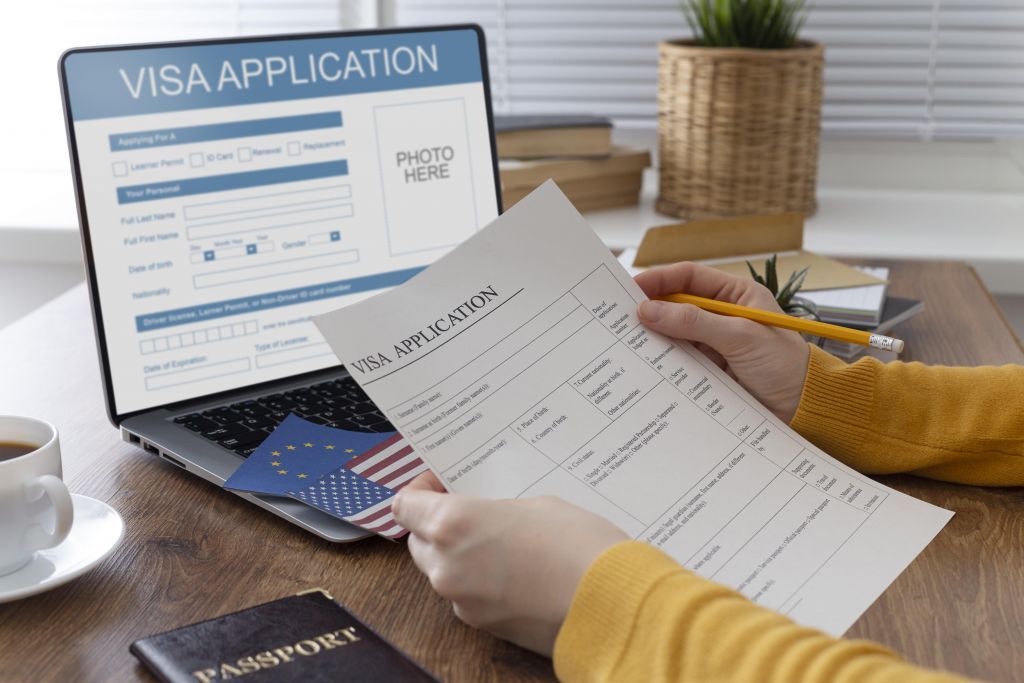
Everything You Need to Know to Work in the U.S.: Which Visa is Right for You?
Working in the United States is an opportunity that opens doors to new experiences, professional growth, and a better quality of life. However, the process of obtaining a work visa can be complicated due to the variety of available options. Each visa type is tailored to different profiles and specific requirements, making it essential to know which is the best option for your particular case.
In this article, you will find a detailed guide on the main employment visas in the U.S., including the H-1B for specialty occupations, the L-1 for intra-company transfers, and the O-1 for individuals with extraordinary abilities. We will also explore the application process, requirements, and common mistakes that can delay or prevent your visa approval.
Keep reading and get ready to take the next step in your career!
Main Types of U.S. Work Visas
Below, we present the most common work visas for professionals who wish to work in the United States. Each has different conditions and benefits:
H-1B Visa: Specialty Occupation Workers
The H-1B is one of the most sought-after visas and is designed for workers in specialty occupations, such as technology, engineering, medicine, and finance.
- Key Requirements: You need a job offer from a U.S. employer and a bachelor's degree or its equivalent in a field related to the job.
- Duration: Initially granted for 3 years, but can be extended up to a maximum of 6 years.
- Limitations: There is an annual cap on H-1B visas, making the process competitive and often dependent on a lottery.
L-1 Visa: Intra-Company Transferee
The L-1 visa allows multinational companies to transfer employees from an overseas office to a U.S. office. It is intended for executives, managers, or workers with specialized knowledge.
- Key Requirements: The applicant must have worked for at least one year outside the U.S. for the company before the transfer.
- Duration: The L-1A (for executives and managers) is valid for 7 years, while the L-1B (for workers with specialized knowledge) has a limit of 5 years.
- Additional Benefit: Allows immediate family members (spouse and children) to come under the L-2 visa, which also permits spouses to work in the U.S.
O-1 Visa: Individuals with Extraordinary Ability
The O-1 visa is for individuals with extraordinary abilities in fields such as science, arts, education, business, or athletics.
- Requirements: You must demonstrate outstanding achievements in your field, such as awards, publications, or recognition. Candidates must be recognized as leaders in their industry.
- Duration: Initially granted for 3 years and can be renewed indefinitely as long as the work continues.
- Ideal for: Artists, scientists, researchers, and athletes who excel nationally or internationally.
E-2 Visa: Treaty Investors
The E-2 visa allows citizens of countries with commercial treaties with the U.S. to invest in a business in the country and obtain a visa to work in that business.
- Requirements: Invest a significant amount in a U.S. enterprise (the amount varies depending on the type of business).
- Duration: Issued for 2 years and can be renewed as long as the business is active.
- Note: Not all countries are eligible for the E-2; check the list of countries with commercial treaties.
H-2B Visa: Temporary Non-Agricultural Workers
The H-2B visa is for temporary workers not engaged in agriculture, such as those in hospitality, construction, and maintenance sectors.
- Requirements: The U.S. employer must demonstrate a temporary shortage of workers in that field.
- Duration: Issued for the duration of the job, generally one year or less.
- Advantage: Does not require a university degree and allows work in high-demand sectors.
Requirements and Application Process
Although each visa has its own requirements, the general process for applying for a U.S. work visa follows some basic steps:
- Job Offer: Most visas require a job offer from a U.S. employer.
- Form Submission: The employer generally files the appropriate form (such as Form I-129 for the H-1B).
- USCIS Approval: If USCIS approves the petition, the applicant must schedule an interview at the U.S. embassy or consulate in their home country.
- Visa Interview: During the interview, your case and documents will be reviewed.
- Final Approval: If the visa is approved, you will be able to enter and work in the U.S. under the conditions of the granted visa.
Tip: Prepare well for the interview and bring all necessary documentation, as any error or lack of information can cause delays.
Common Mistakes and How to Avoid Them
When applying for a U.S. work visa, it is important to avoid mistakes that could delay or even result in visa denial:
- Not meeting specific requirements: Make sure you meet the specific requirements of the visa you are applying for, such as academic degrees or professional experience.
- Errors in documentation: Verify that all documents are in order, complete, and correctly translated if necessary.
- Lack of interview preparation: The interview is key; prepare to answer questions about your employment, experience, and plans in the U.S.
- Dates and deadlines: Submit the application within the established deadlines, especially for visas with annual caps, such as the H-1B.
Tips for Choosing the Right Visa for You
Choosing the right visa depends on several factors, such as your occupation, experience level, and goals in the U.S. Here are some tips for making the best decision:
- Analyze your profile and experience: If you have a university degree and a job offer, the H-1B may be suitable. If you are a prominent artist or athlete, the O-1 might be the best option.
- Consider your long-term goals: Some visas, like the H-1B, offer a path to permanent residency (Green Card), while others, like the H-2B, do not.
- Consult a professional: The help of an immigration lawyer can be crucial in choosing the correct visa and preparing your application.
Conclusions:
Applying for a work visa in the United States is a process that requires preparation, knowledge, and attention to detail. With the right visa, you can open doors to new professional opportunities and personal growth.
From the H-1B to the O-1, each visa has specific requirements and offers different benefits.
Analyze your options, avoid common mistakes, and prepare for the application process with good planning.
Ready to work in the U.S.? Read our complete blog and discover how to select the ideal work visa for you. Don't let a lack of information hinder your dreams!
At USA FILE Solutions, we help you prepare the documents for your immigration application. Our immigration document preparation team prepares your forms with the information you provide, following your instructions. Do you need help? We are here for you! If you need help preparing your forms, contact us. For legal questions about your case, we recommend speaking with a licensed immigration attorney. At USA FILE Solutions, we understand how important each individual case is and are committed to providing you with the best possible service at all times.