





Who renews your Parole? Practical Guide to USCIS, ICE and CBP
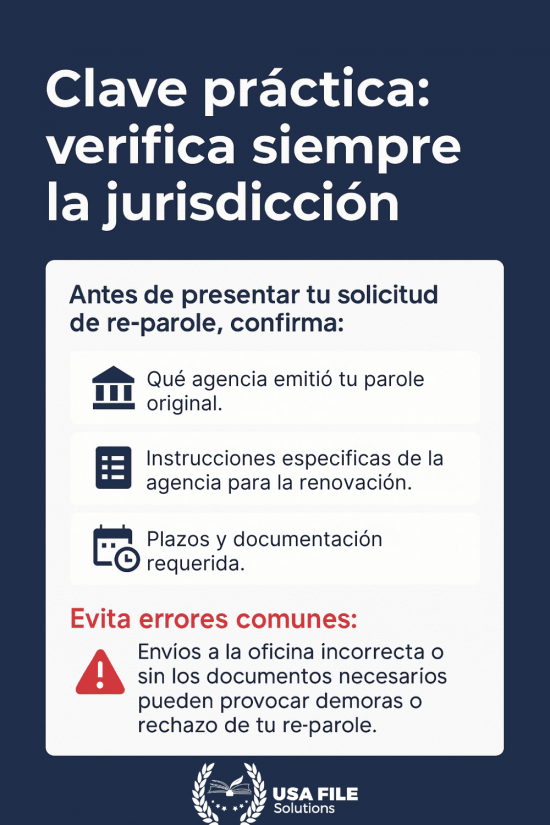
Your re-parole or parole renewal can be confusing if you don't know which agency has jurisdiction. In the United States, USCIS, ICE and CBP handle different types of permits, and submitting your application to the wrong office can delay or even cancel your application.
In this article we explain who renews the re-parolehow to identify the right agency and practical tips to avoid mistakes.
What is re-parole?
The re-parole is the renewal or extension of a parole previously granted. It is important to understand that:
Not all parole are the same: they may have been issued by USCIS, CBP or in the custody of ICE.
Each agency has its own procedure and jurisdiction for permit renewal.
Sending your application to the wrong place can cause significant delays.
Re-parole with USCIS
If your parole was initially granted by USCISThe agency retains jurisdiction for renewal.
What you should do:
Submit the form I-131 following official USCIS instructions.
Send your request to the address indicated for re-parole, not to CBP or ICE offices.
Keep copies of all documents and receipts, as USCIS may require them to process your extension.
Tip: USCIS usually renews humanitarian parole, advance parole or parole in emergency cases that have been initiated with this agency.
Re-parole with ICE or CBP
If your parole was granted by:
- CBP: normally when entering the U.S. through a port of entry.
- ICE: parole cases during custody or supervision.
These agencies usually retain jurisdiction for re-parole, unless otherwise instructed.
What you should do:
Check the instructions from the agency that issued your original permit.
In some cases, ICE or CBP provides specific forms or notices to apply for renewal.
Avoid submitting your application to USCIS if your initial permit was granted by CBP or ICE, as this may result in rejection or delays.
Common uses and strategies for parole renewal
The re-parole is applied in multiple migratory contexts, not only as an extension, but also as a legal and practical strategy.
These are some of the most frequent cases:
Humanitarian or emergency permits: Allows you to remain legally in the U.S. for medical, family or protective reasons.
Advance parole for temporary travel: It is used to leave and return to the country without losing immigration status.
Parole in place for military family members: Facilitates the renewal of temporary leave for spouses or parents of members of the Armed Forces.
Continuity in Custody or Supervision (ICE): In certain cases, ICE may grant re-parole to maintain status while proceedings are resolved.
Migration strategy in pending proceedings: Many immigrants apply for re-parole while awaiting a visa, asylum or adjustment of status, avoiding legal interruptions.
Form I-131
The form I-131 is the official document that is used to apply for the re-parole to USCIS.
If your original permit was granted by USCIS, the I-131 allows you to extend or renew your parole.
Not all ICE or CBP cases use this form; in those cases, the agency will indicate the specific procedure.
For more information on Form I-131 fees and details, you can read our full article here: New USCIS Fee: Immigration Parole Fee and I-131
Frequently asked questions about re-parole:
1. Which form should I use for re-parole?
For USCISis used, the form I-131 according to official instructions.
For CBP or ICEIf the original agency has provided any notices or forms, verify them.
How long does the re-parole process take?
It depends on the agency: USCIS usually takes weeks or months, while CBP or ICE may vary depending on the jurisdiction and complexity of the case.
What documents do I need to renew my parole?
Copy of your original parole
Valid ID
Corresponding application form
Proof of any additional requirements as directed by the agency
4. What happens if I send my application to the wrong place?
Your application can be rejected or delayed significantly. That is why it is crucial to verify jurisdiction before submitting any re-parole application.
5. Can I ask for legal help for my re-parole?
Yes. An attorney or accredited immigration consultant can help you:
Determining the right agency
Review forms and documentation
Avoiding errors that delay your paperwork
Final recommendations
Consultation official notices USCIS, ICE and CBP prior to submitting any paperwork.
If you have questions about jurisdictionA lawyer or accredited advisor can help you identify where to file your application.
Keep your receipts and communications in writing; they serve as evidence in case of problems.
Plan ahead: re-parole procedures can take weeks or months depending on the agency.
I AM NOT AN ATTORNEY LICENSED TO PRACTICE LAW IN THE STATE OF FLORIDA, AND I MAY NOT GIVE LEGAL ADVICE OR ACCEPT FEES FOR LEGAL ADVICE.
I AM NOT AN ATTORNEY LICENSED TO PRACTICE LAW IN THE STATE OF FLORIDA AND CANNOT GIVE LEGAL ADVICE OR ACCEPT FEES FOR LEGAL ADVICE.
Our firm is associated with attorneys licensed in the state of Florida who can provide independent legal services. The notary only performs notarial acts and does not provide legal advice.